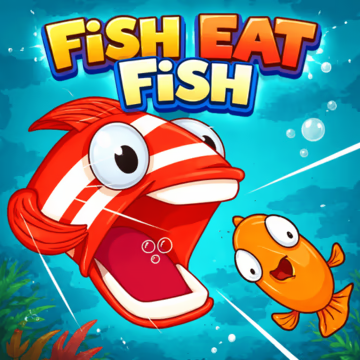
Fish Eat Fish is a simple yet unpredictable fight for survival. Eat smaller fish, avoid bigger predators, and use smart tactics to stay ahead.
Why Is "Big Fish Eat Small Fish" Still So Appealing?
The appeal of Fish Eat Fish does not come from a complicated storyline. The game starts with a simple idea that anyone can understand: you control a small fish, search for the right prey to grow stronger, and avoid creatures that are bigger than you.
What makes this concept interesting is how a simple rule creates such a clear and satisfying gameplay loop. As your fish grows, prey that was once out of reach suddenly becomes a target. In a way, the world seems to expand alongside your character.
But getting bigger does not mean you are completely safe. A fish that was once the predator can quickly become prey to something even larger. This constant shift between hunter and hunted gives every encounter a sense of uncertainty and keeps players on their toes.
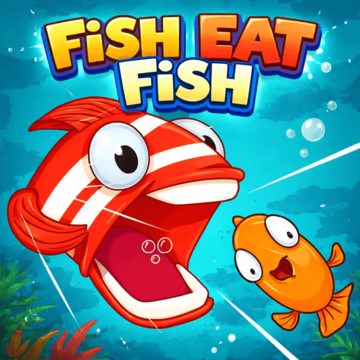
Explore a constantly shifting underwater food chain in Fish Eat Fish
The Art of Fish Design: Simple, Yet Instantly Recognizable
In a game that relies heavily on size and quick reactions, character design is about more than just making the fish look good. A well-designed fish needs to help players understand what is happening at a glance.
Through shape and size alone, players should be able to tell which fish are small enough to eat, which ones are around the same level, and which ones pose a serious threat. Differences in color, silhouette, body proportions, and movement therefore become an important part of the gameplay itself.
This creates an interesting challenge for character design. The simpler the fish looks, the more purpose every detail needs to have. The eyes, body shape, fins, tail, and swimming motion all contribute to a visual system that helps players understand the underwater world without having to stop and read a long list of instructions.
How to Play Fish Eat Fish
General Gameplay
The core objective of Fish Eat Fish revolves around survival and growth. You start out as a small fish, look for suitable targets to eat, build up your advantage, and gradually work your way toward larger prey.
However, growing too quickly or moving without paying attention can put you in a dangerous situation. That means the gameplay is not simply about finding fish to eat. It is also about knowing when to make a move and when to back off.
Controls
The controls are designed to feel intuitive, allowing players to focus quickly on what is happening around them. Your fish needs to move smoothly enough to chase prey while still being able to change direction when a dangerous opponent suddenly appears.
When the controls stay out of the way, players can focus on what really matters: reading the situation and making the right decision.
The Two Most Important Rules
Eat Smaller Fish
This is the foundation of your growth. Prioritizing smaller fish allows you to build up steadily without taking unnecessary risks. Fish that are already in a vulnerable position or are easier to approach can also create valuable opportunities to increase your size.
Avoid Larger Fish
On the other hand, larger fish are the clearest warning that you have reached your current limit. When you spot an opponent that is significantly bigger, keeping your distance and changing direction is usually the safer move. Watching how larger fish move can also help you anticipate danger before it gets too close.
From Fish Eat Fish to How to Fish
If Fish Eat Fish tells a story about survival beneath the surface, fishing games like How to Fish offer a different way to experience the underwater world. Instead of seeing the ocean as a battlefield where the strong consume the weak, players can step into the role of an explorer, patiently discovering what might be hiding below.
These two approaches may be different, but they share one important idea: the water is never just a background. It is a living world filled with movement, surprises, and unanswered questions that keep players wondering what might be waiting just beyond the next wave.